What’s Changing About Software in the Age of AI?
After twenty years in software, I’ve started to feel very clearly since 2026 that the industry is going through changes we never expected. People often talk about how much faster AI can write code. But what we find truly interesting is how this is also changing the way software is developed—and how much it costs. Lower development costs are redefining which processes are worth turning into software.
Changes in Development
In the past, when building custom software, we were very careful not to go down the wrong path. We would spend a lot of time confirming requirements, workflows, screens, and specifications. Only after everyone was on the same page would we start writing code.
The reason was simple: once the code was written, making changes could be extremely expensive.
Back then, software development was more like building a house. You had to draw up the plans and confirm the specifications before construction began. Now, we can build a working demo first and try it out, then identify problems through actual use. If a button is in the wrong place, we move it. If a workflow doesn’t feel right, we redo it. If a screen has too much information, we reorganize the layout. We can even change direction entirely if, after a round of development, we realize our original idea was off the mark.
Because writing code may no longer be the most expensive part of the entire development process, our approach has gradually shifted from “figure everything out first, then start building” to “build it first, then find the answers through real-world use.”
Changes in Pricing
As development costs fall, prices are naturally affected. In the past, custom software could cost hundreds of thousands or even over a million. Often, the software itself was little more than form and workflow validation—not particularly sophisticated work, but it still required a great deal of labor. So when we came across a workflow, the first question was often not “Can we build it?” but “Is it worth spending this much money on?”
If the answer was no, the only options were to keep using Excel, LINE, or paper, or have someone handle the work every day.
That boundary is now moving. Tasks that used to need to save 100,000 in labor costs to be worth doing may now be worth automating for just a few thousand. So lower software prices don’t just mean more people can buy software; they also expand the range of things worth automating. This even applies to throwaway software. In the past, it would have been hard to imagine a group of friends building a simple website for an eight-day trip to Japan, with the day’s itinerary, an embedded Google Map, and a timeline. Where to go in the morning, what time to meet, where to go in the afternoon, and where to stay at night—all visible when everyone opens the site. Once the trip is over, no one may ever use the website again.
If someone said they wanted to build a website for an eight-day trip, it would probably sound like a bit of a waste. But if the cost of making it were low enough to ignore, it would make sense. It doesn’t need to exist for five years or build an audience of ten thousand users. It only needs to make this trip easier. Once the trip is over, its job is done.
But Our Needs Haven’t Changed
Technology is always changing, but businesses haven’t run out of problems to solve. Orders still need to be printed for picking, data still needs to be copied, inventory still needs to be counted, customers still need to be notified, and reports still need to be prepared. Payment requests, reconciliations, payroll, and invoices existed twenty years ago, and they’re still part of daily work today.
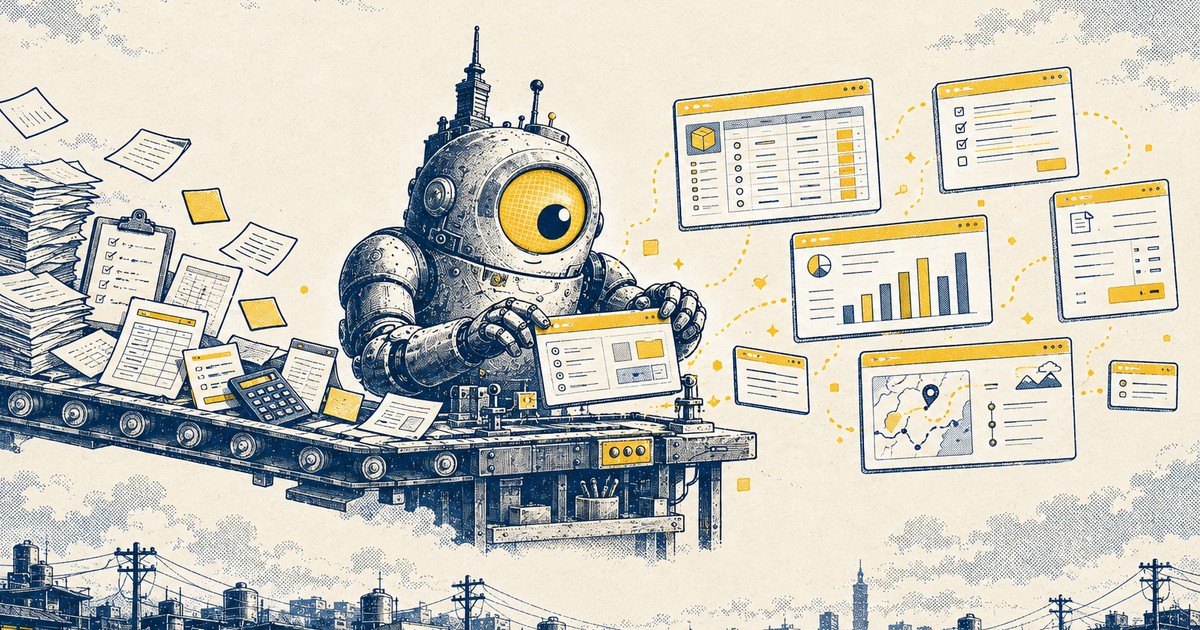
What has really changed is the cost of solving these problems. In the past, it might have been too expensive to do anything but assign someone to handle them every day. Now, there’s an opportunity to turn them into a small tool, an automated workflow, or even a complete system. At this stage, the change AI has brought us isn’t “we’ll hand everything over to AI.” It’s that software we once thought wasn’t worth building can now actually be made.
Conclusion
We used to think customization and scalability were almost opposites. Each company had its own processes and needs, so it took a person or a team to serve each one. That made custom software difficult to offer cheaply or produce at scale.
But if the costs of development, modification, and testing continue to fall, the two don’t necessarily have to conflict. Every company can have a system that fits the way it works—whether that’s an ERP used for several years or a travel website used for just eight days. If the cost of solving the problem is low enough, it’s worth building. That’s why, in this new era, we want to keep building a company that delivers customized software at scale.
If your current systems aren’t keeping up with the way your business works, click the Get an Online Quote button below to talk with us about the challenges you’re facing.